
Dave Webb
August, 2026
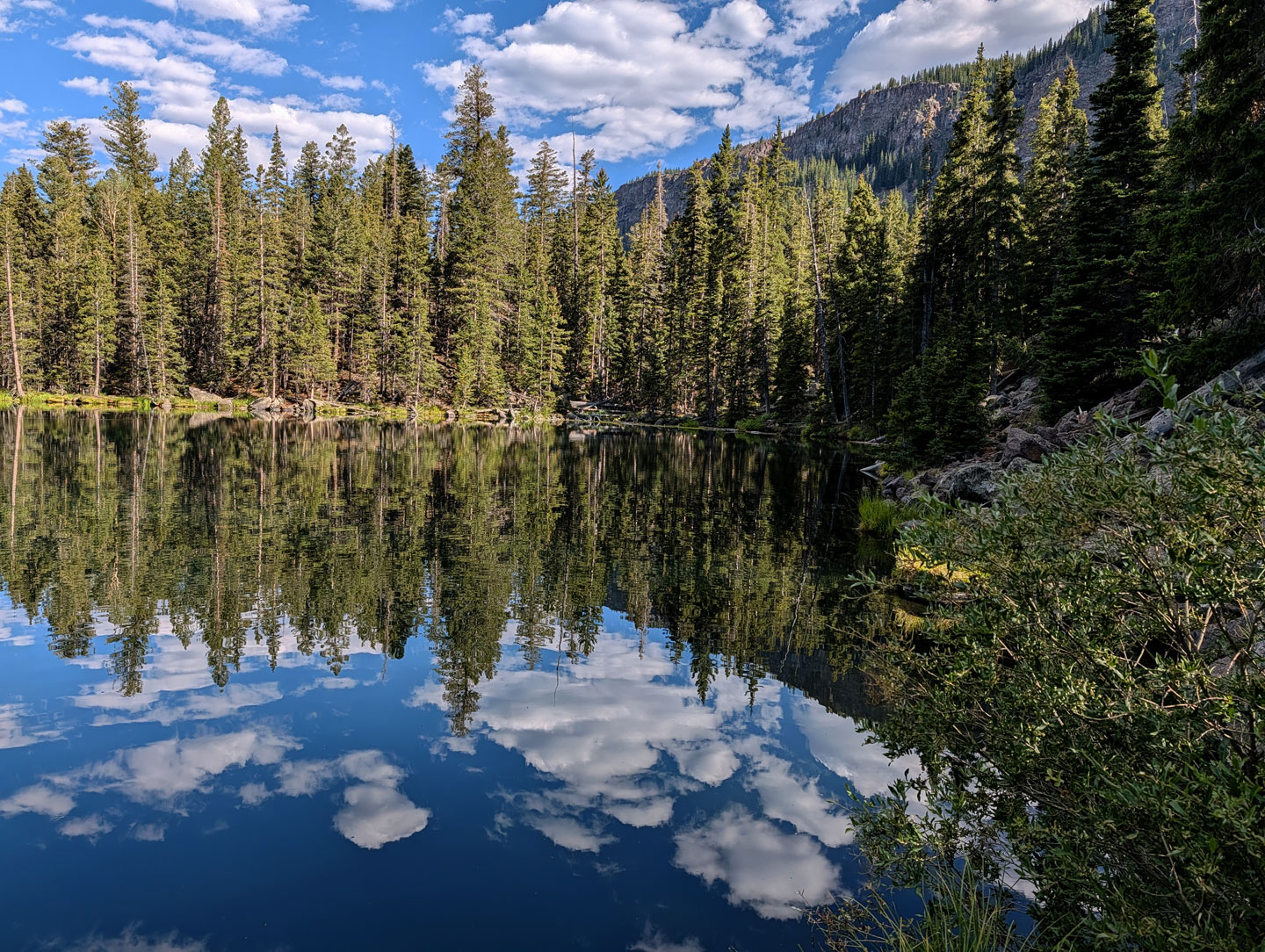
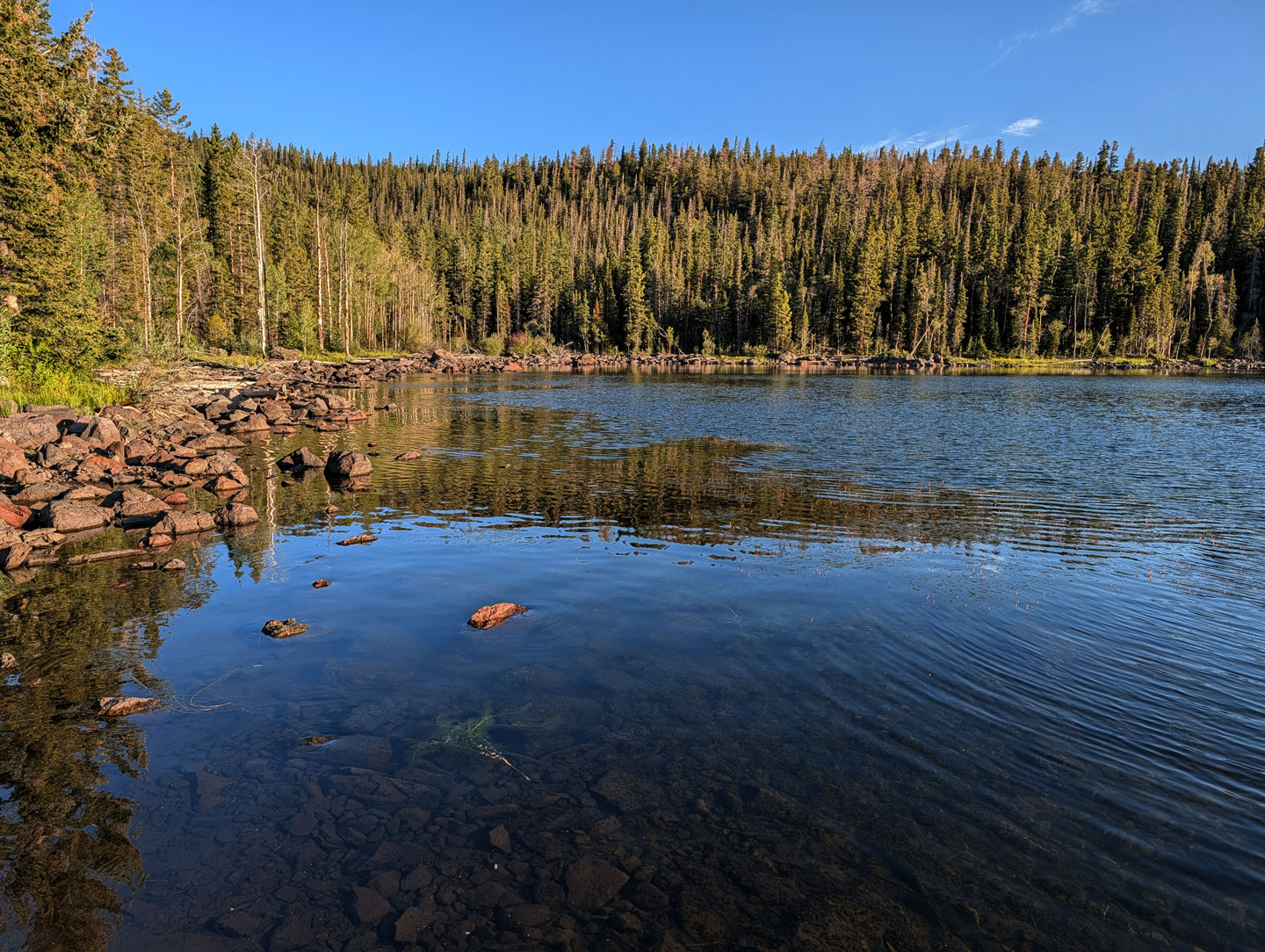
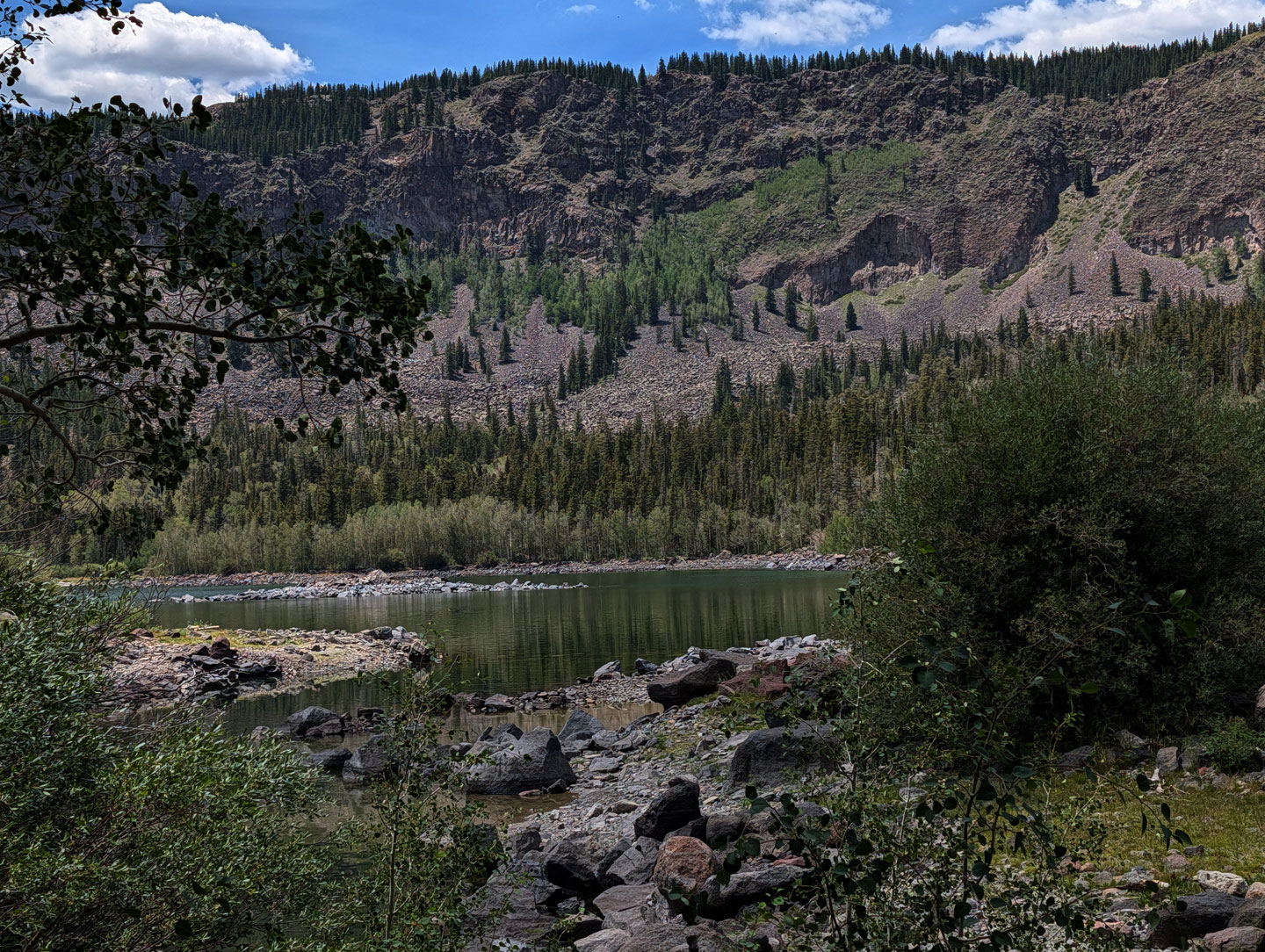
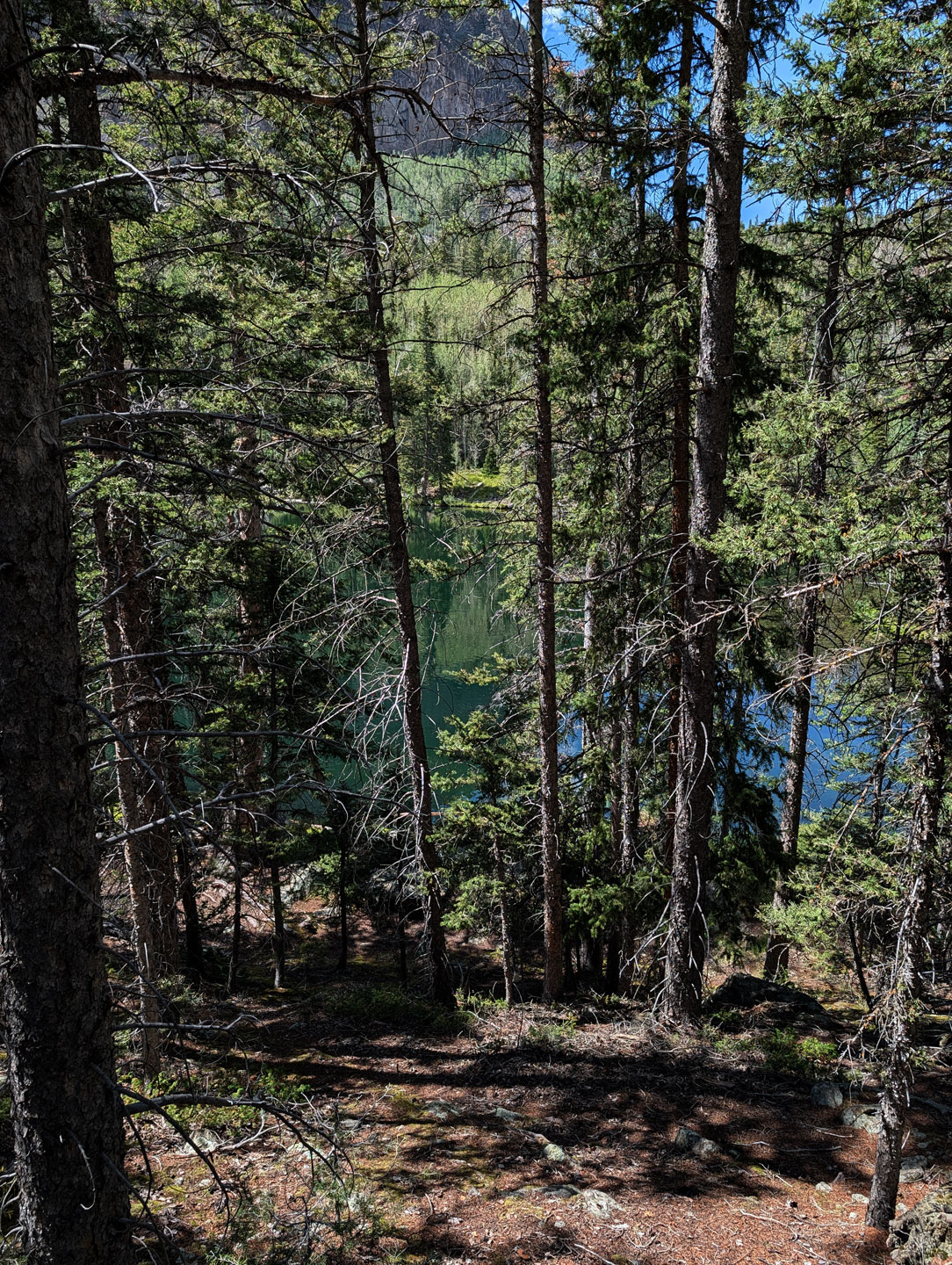
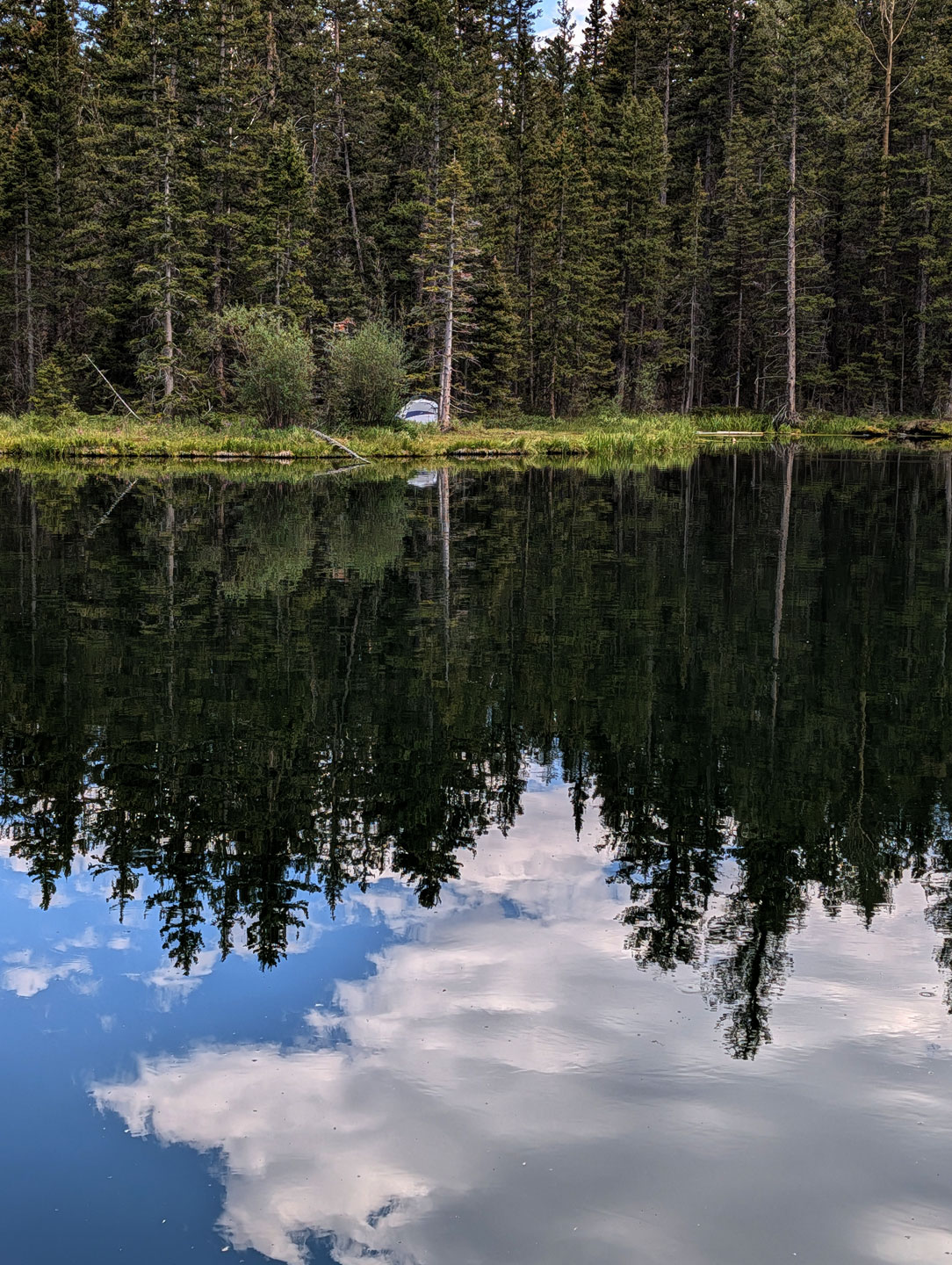
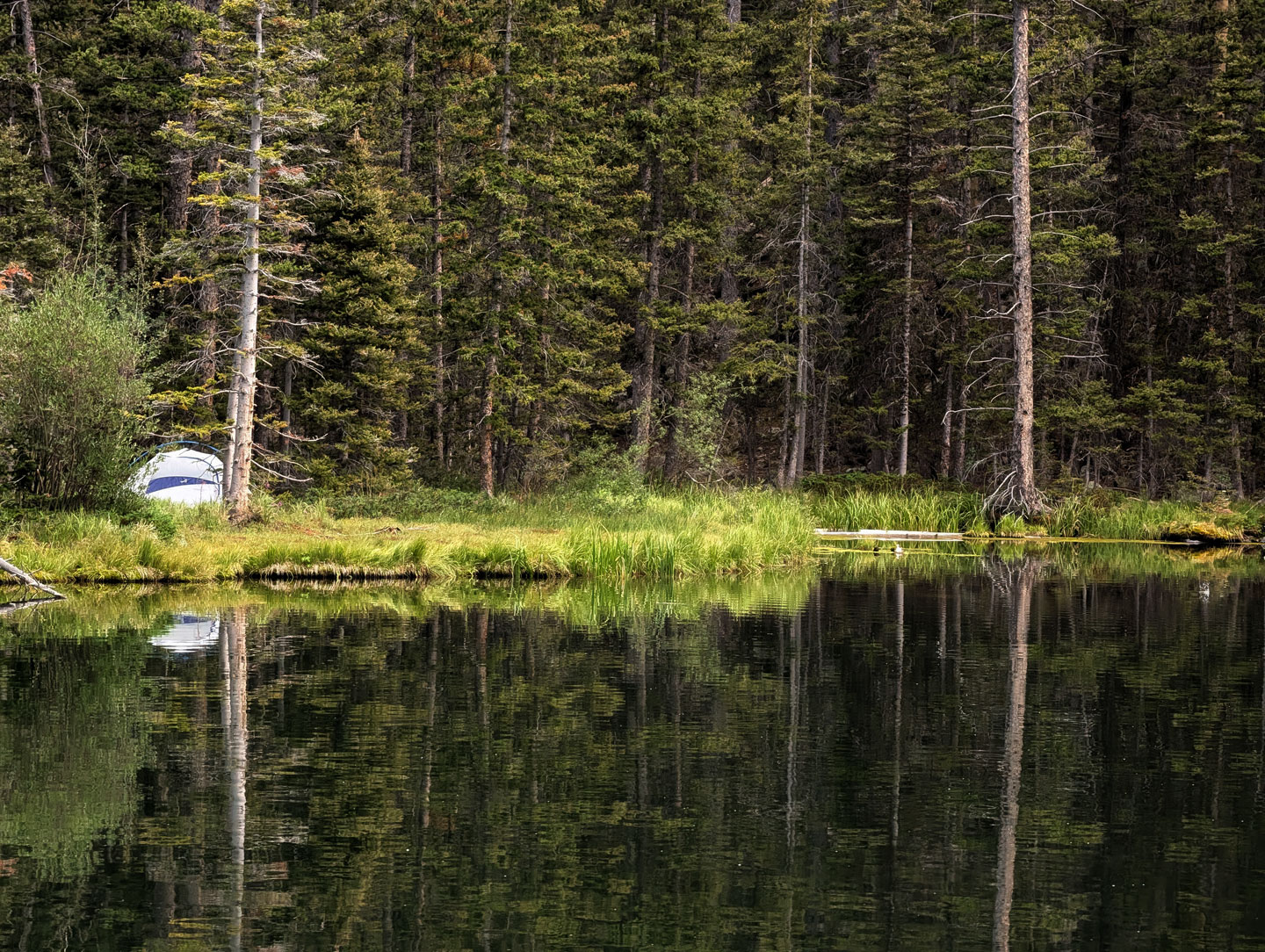
While planning a trip to Boulder Mountain, I stumbled upon vague information about a lake described as amazingly picturesque and hard to find, managed for quality tiger and brook trout. A steep, rocky 4X4 road leads into the general area, and then you have to hike off-trail to find the lake.
“Sounds like my kind of place,” I thought as I made final preparations and let my wife know where to send the search party, if I didn’t make it back on schedule.
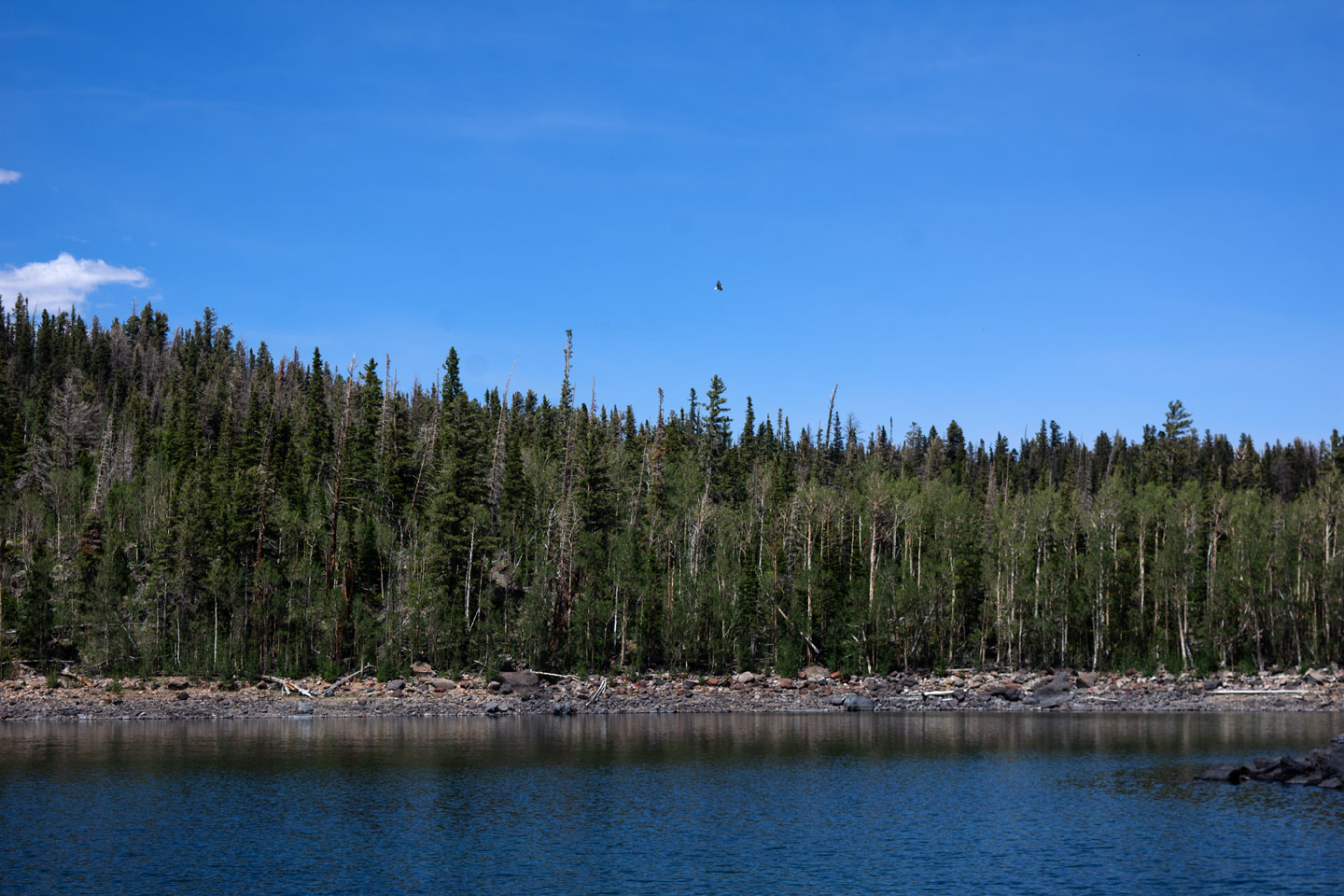
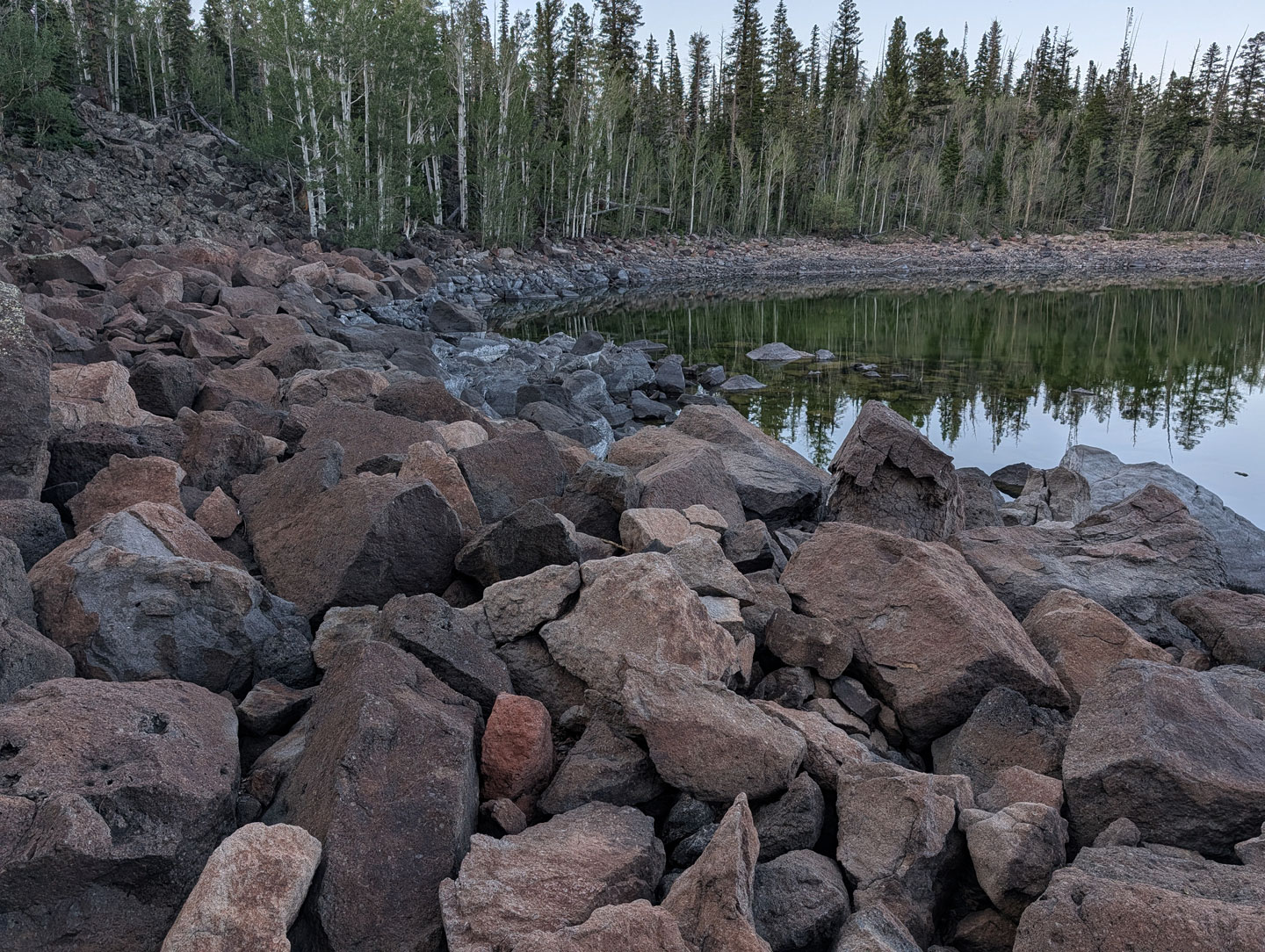
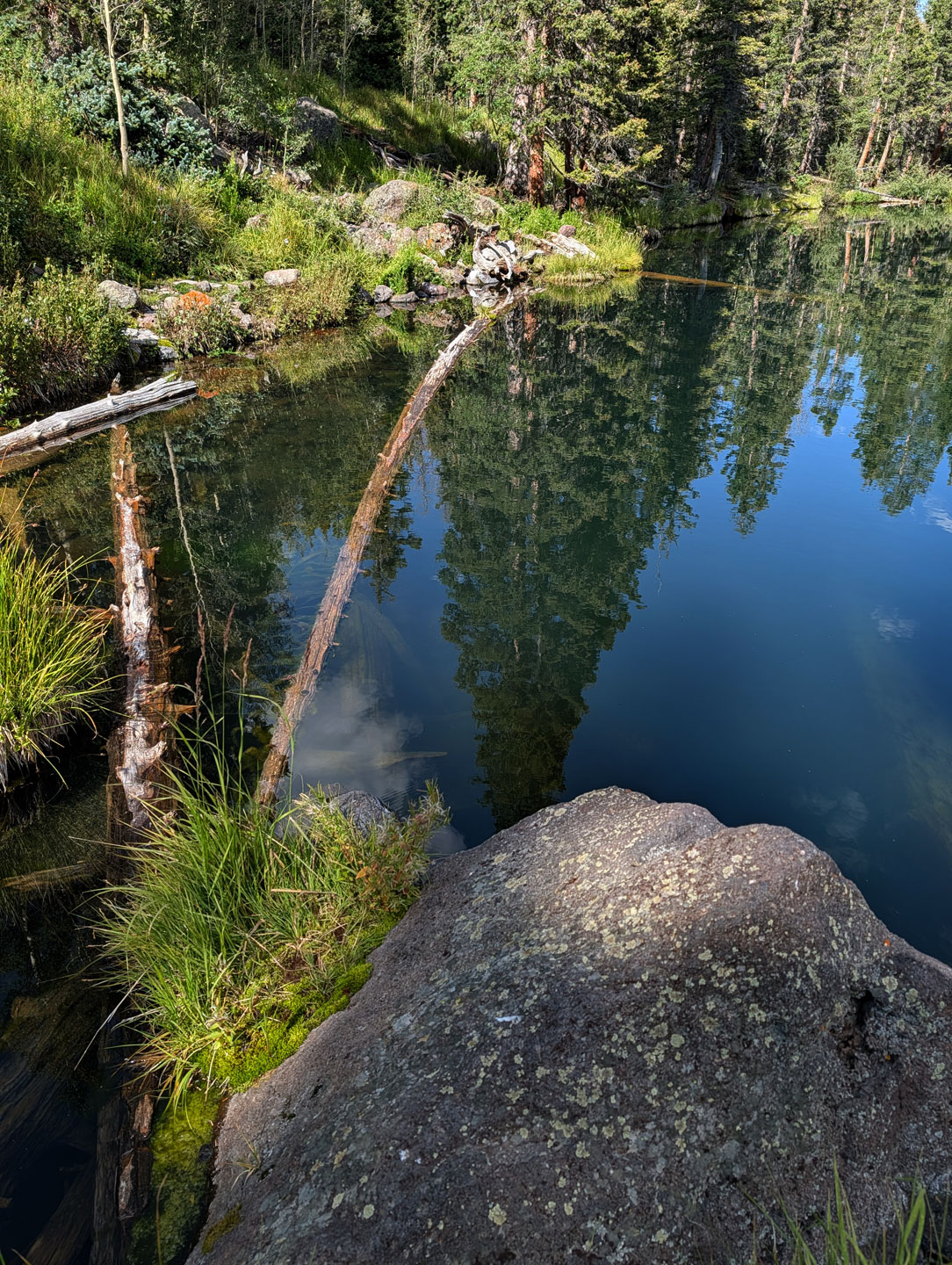
It turned into a fun trip. The lake was beautiful, as you can see from my photos. The fish were also beautiful, and big, and fought hard. They were hard to catch, as expected. I was fly fishing, and had to work hard for every bite, but caught my biggest tigers of the year.
On Boulder Mountain, and in many other areas, lakes with fast fishing usually offer smaller fish. Trophy fish grow in reservoirs with fewer fish, where they don’t have to compete so much for food.
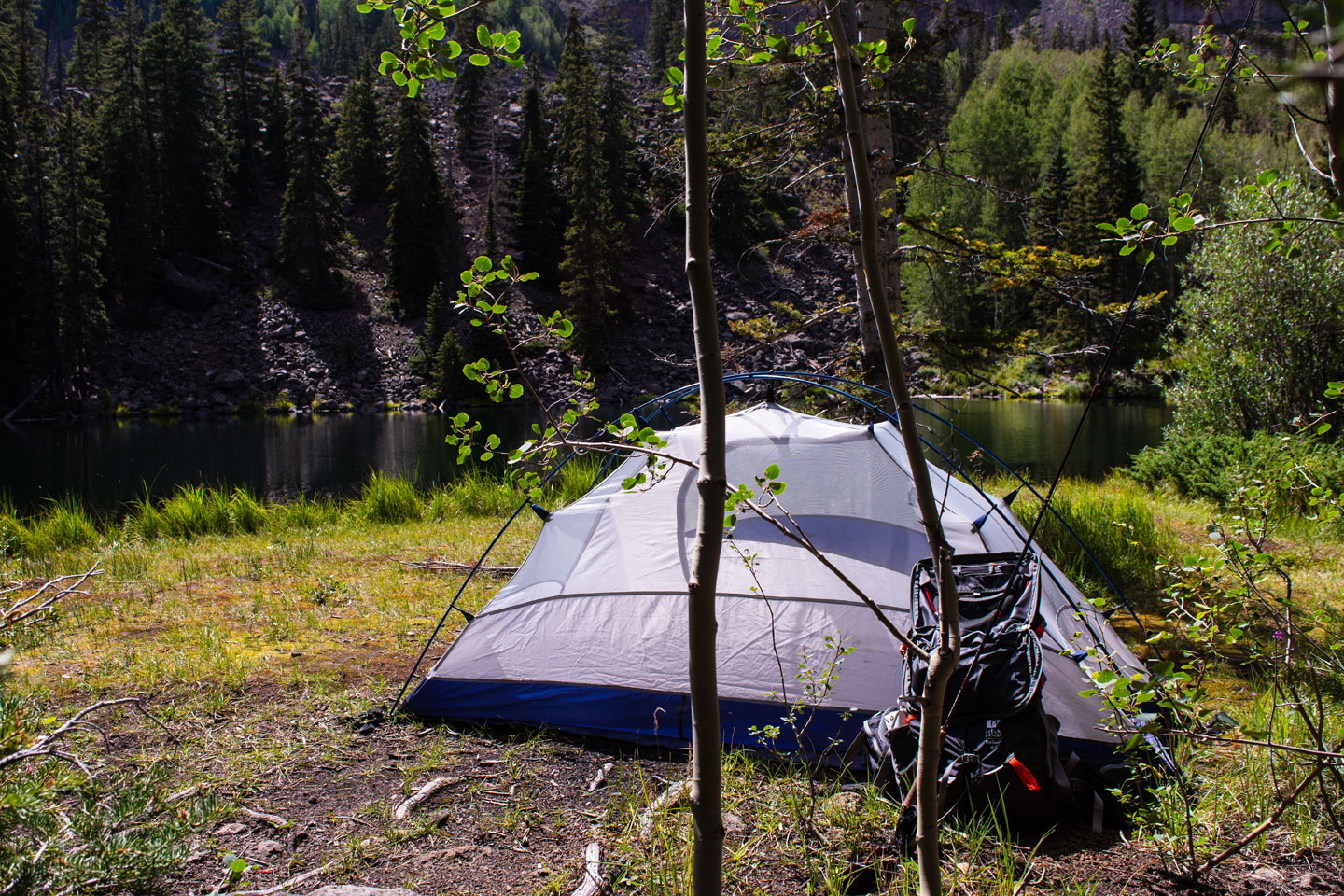
I was able to drive to Beaver Dam Reservoir, where I set up base camp. The access road was rough, steep, with loose rocks and mud holes, but I was able to make it in my stock Toyota FJ without any problem. There are several nice spots to camp at that lake and nearby.
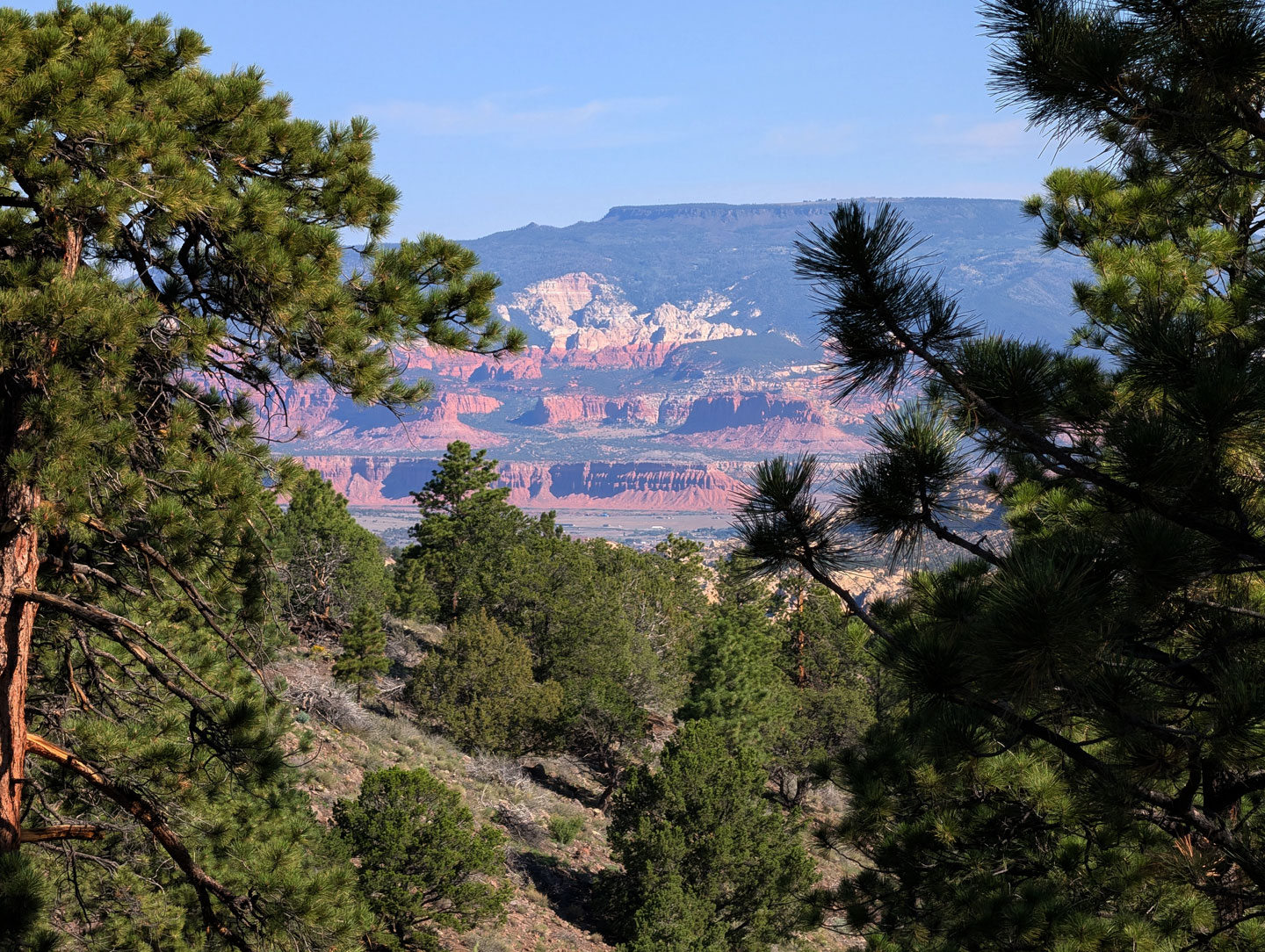
From Beaver Dam, I hiked to other lakes in the area. I did not find fast fishing at any of the lakes, but I saw enough quality fish to keep me interested. It is a big, rugged, beautiful area where you have a good chance at catching a trophy.
Hiking in this area is difficult. Large boulders ring the lakes, and it is a challenge to just move along the shorelines. The forest is thick, and you have to fight your way up steep ridges and climb over tangled deadfall to move from lake to lake.
The little lake that piqued my interest proved to be the star. There were no other people around. In one spot, I could see several large tiger trout holding under logs that descended into deep water. The fish looked huge. I really believe the largest would have measured 28 inches or more.
I could see the fish. They could see me. They didn’t seem startled. They just ignored my flies and me. I was there on a sunny, hot, dog-days-of-summer afternoon, and those big fish were content to just hang out near the bottom. I sat down and waited for 15 minutes before casting to them, hoping they would forget I was a dangerous human. I cast leaches and woolly buggers and damsel nymphs, but they didn’t show any interest.
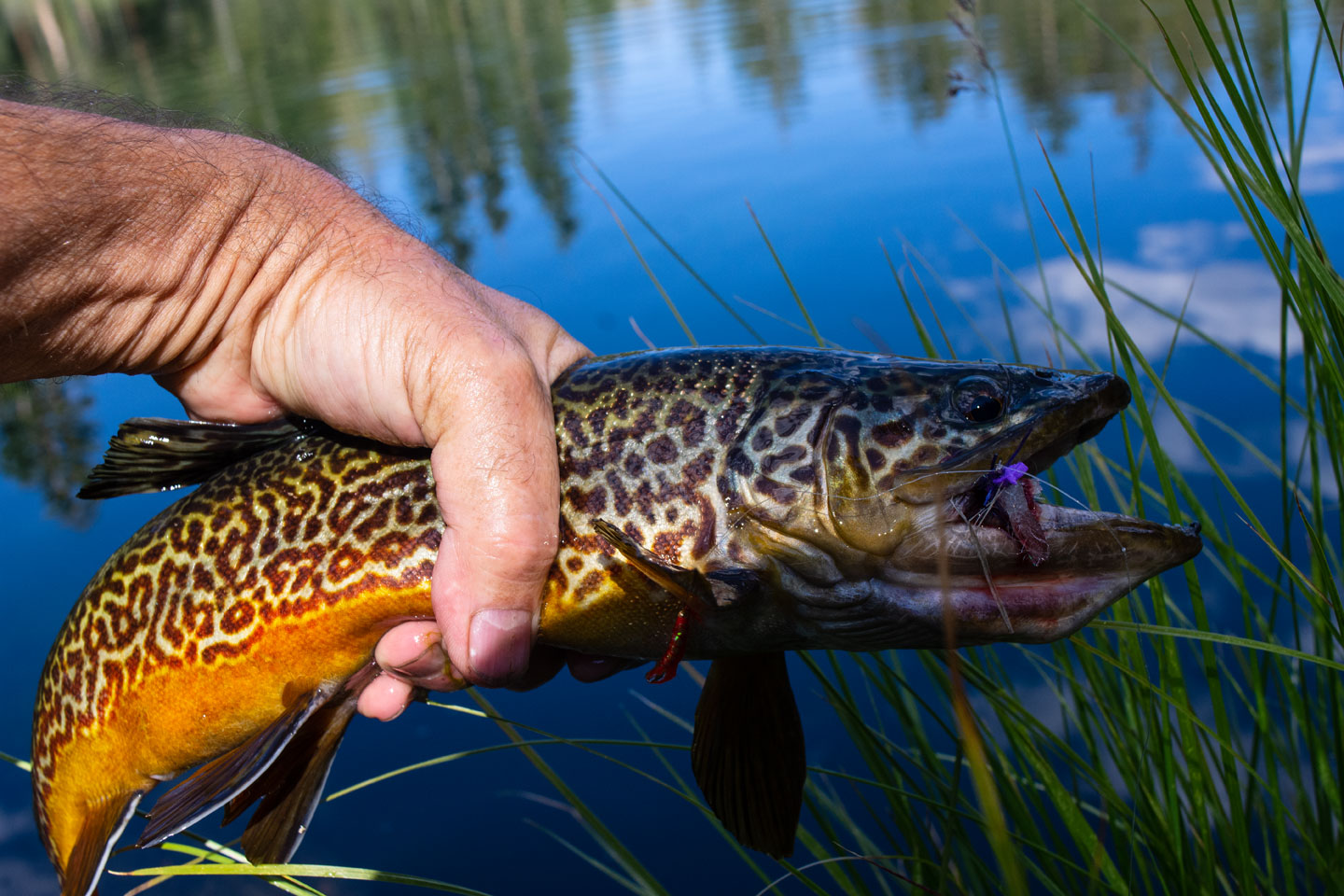
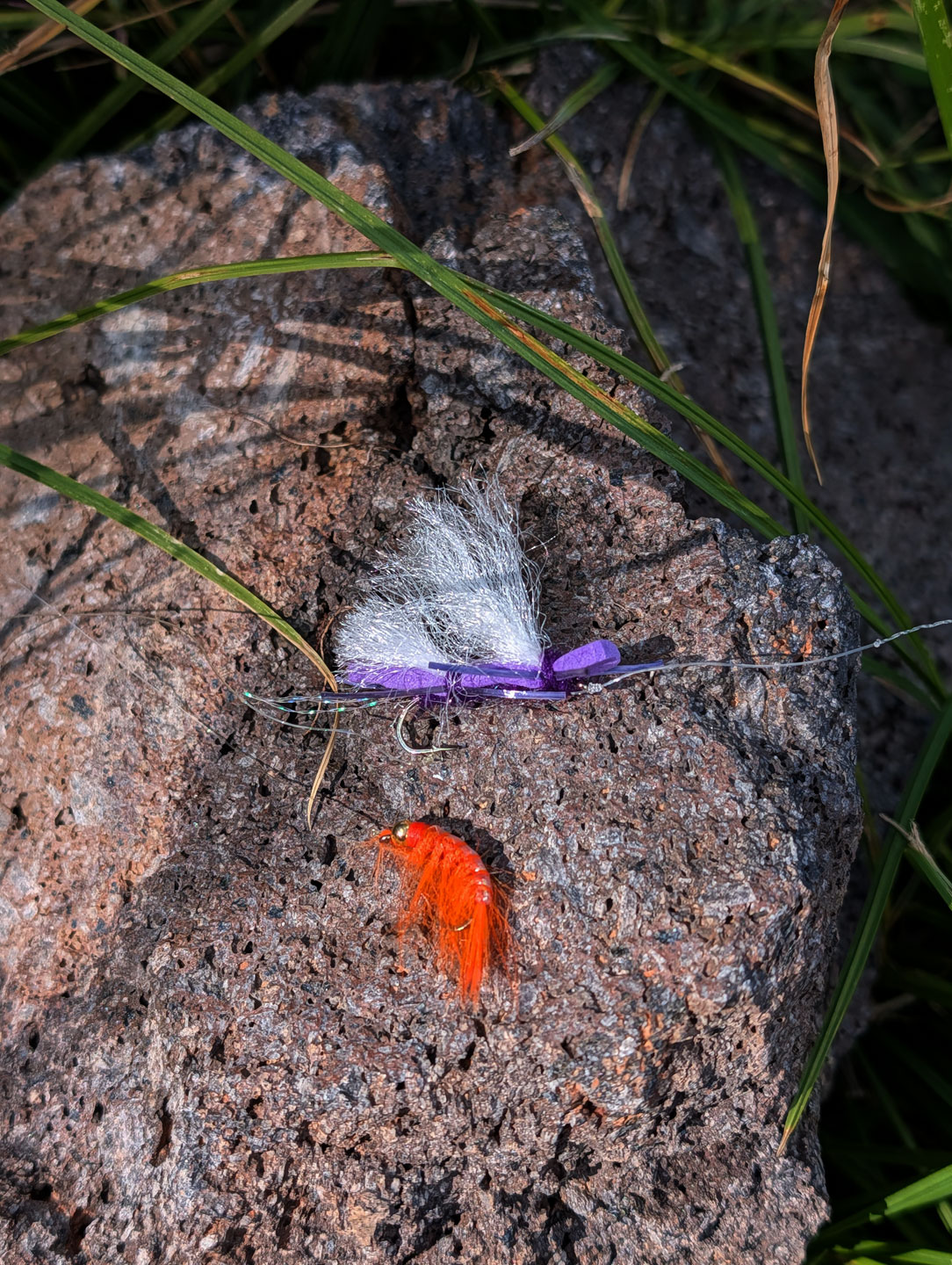
I tied on a big, purple chubby to use as an attractor/indicator, and dropped a pink scud on three feet of leader. I cast it out into deep water and figured I’d slowly hop the chubby along the log until the scud was above the big fish. I gave it one hop and bang, a fish hit the chubby. I reeled in the brightly colored tiger you see in my photos.
That spooked the big fish, and they disappeared.
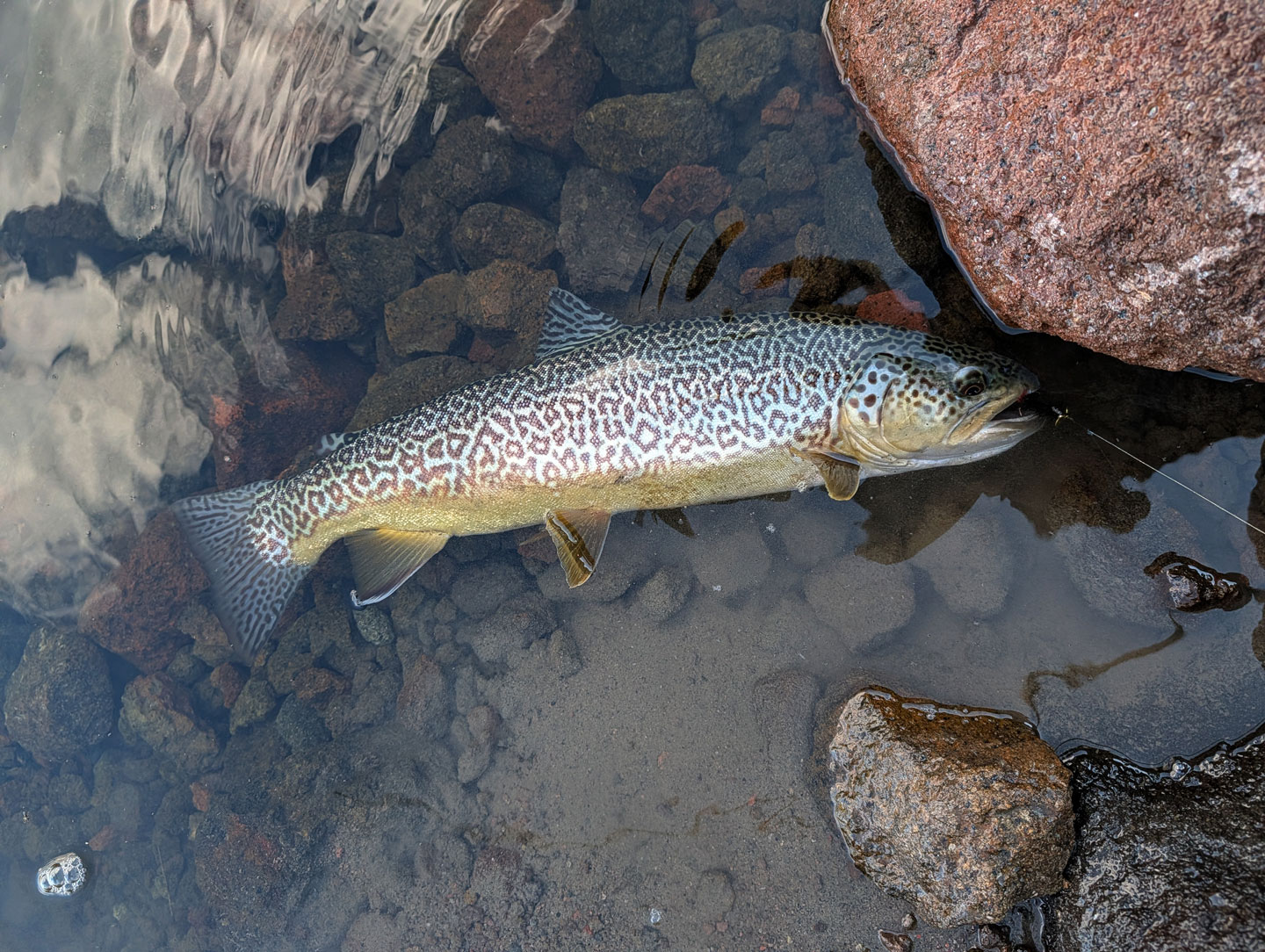
My other fish photo shows a 19-inch tiger caught on a back woolly worm with a red tail.
Fishing was tough with no particular pattern or technique that produced steady action. Next time, I’d try a little different strategy. I’d backpack in, camping right at that lake, so I could fish the late evening and early morning hours when fish are most active. I’d carry in a float tube or Packraft. If you walk the shoreline, you scare the fish. Instead, I’d sit in the tube over deep water and cast toward shore, using a pattern that has enough weight to get down 3-4 feet. That strategy would give me a fighting chance.
It was a very enjoyable trip.